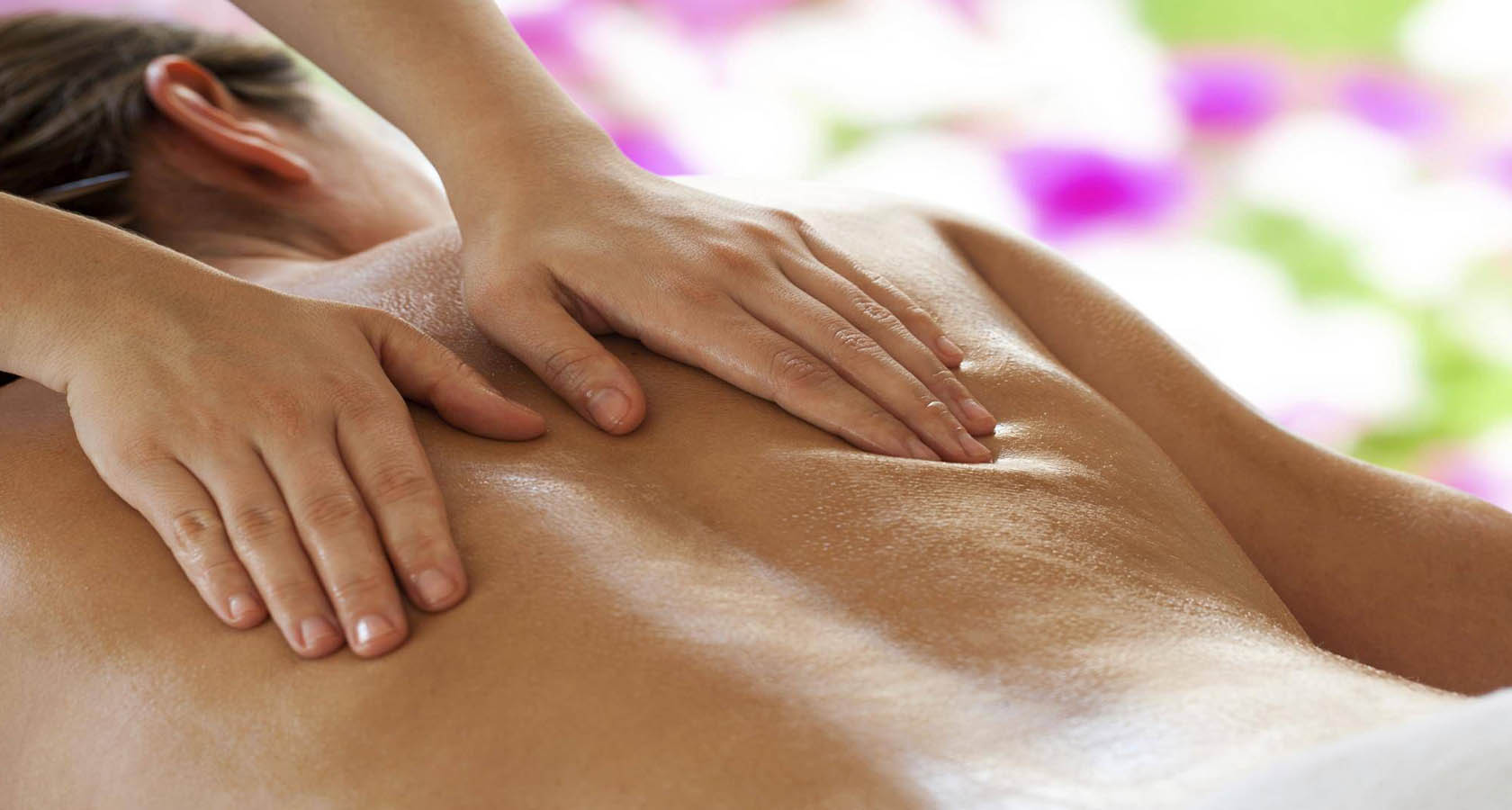
How to Give a Back Massage
While performing an advanced, therapeutic back massage requires plenty of professional training, you can still give someone a relaxing, tissue stimulating massage even without training. By learning some of the basic massage techniques and how to apply them, you can begin giving quality massages at home. One of the most important parts to note is that without professional training, you should apply only light pressure with all of your techniques.
Setting Up for a Back Massage
Choose a comfortable location.Using a massage table will give you the best access to somebody's back, and it's built for comfort, complete with a face cradle for alignment of the spine. However, if that's not available, there are a few alternatives.
- If you don't have access to a massage table, then you can try using the floor, a couch, a bed, or even a kitchen table if it’s sturdy enough for the person to lie on. Each option has drawbacks that make it less ideal than a massage table, mostly due to comfort issues for the person receiving the massage and height issues requiring the person giving the massage to lean over in uncomfortable ways.
- If a bed is the best option available, make sure that the suggestion doesn’t come across as inappropriate. Consider the relationship you have with the person and discuss that the massage will take place on a bed beforehand.
Place a soft mat down.If you don’t have access to a massage table, and you’re opting for one of the harder-surfaced alternatives, then lay down a soft mat. Use a mat that is at least two inches thick to provide the proper comfort for the person receiving the massage.
Spread a sheet over the table or mat.Since the person will dress down most or all of the way for his or her massage, a clean sheet over the mat or table will be both more hygienic and more comfortable for the person. It will also catch any excess oil.
Prepare the room. Make sure the room is warm without being hot. This is the ideal atmosphere for the person to relax the muscles you’re trying to massage.
- Play some uneventful music. New age, ambient music, quiet classical music, or even soundscapes will help the person relax to their fullest. Pulsing, driving music won't help. Keep the volume low.
- Turn the lights down just enough so there's no glare in the room.
- Light scented aromatherapy candles. This is optional, and you should ask the person before lighting the candles since some people enjoy the smells while others are too sensitive to them.
Have the person undress to his or her comfort level. Massage is best given and received without clothing on the area being massaged, especially if you are using oil or lotion. Request that the person undresses as much as he or she is comfortable with.
- Always provide an additional towel or sheet above and beyond the one covering the table. This way the person can lie down and cover the parts of his or her body not being massaged. This will make the environment both more comfortable and warmer, which is relaxing.
- If privacy is a concern, step out of the room as you have the person dress down and cover himself/herself with the additional towel or sheet. Knock and ensure that the person is ready for reentering the room.
- If the person left pants or underwear on, you could tuck the edge of the towel or sheet into the waistband to ensure no oil from the massage stains the material.
Have the person lie face down.If you have a proper massage table, this means the person’s face will rest in the face cradle.
- If it’s comfortable for the person, you can also use a pillow or folded towel beneath the ankles. This will support the person's lower back.
Giving a Back Massage
Tell the person you are about to begin.Tell them to let you know if anything you are doing is painful or uncomfortable. Part of them being comfortable is having a feeling of trust in you. This is not the time to make jokes or suggestive comments.
- Periodically remind the person to take a slow, deep breath. It will help with relaxation.
Pour massage oil in the palm of your hand. Start with about one teaspoon, which is roughly the size of a quarter. Warm it by rubbing it between your hands before applying it to the person.
- Good oils to use are organic coconut oil, grape seed oil, jojoba oil, or almond oil. There are many expensive scented and speciality massage oils on the market you can try too.
Spread the oil around.The main technique for spreading the warmed oil across the person’s back is called effleurage, which means “light friction.”[1] Use gliding movements in long, even strokes.[2]
- Use the whole of your hands and start at the bottom of the person’s back, moving upward. Always upward toward the heart (the direction of blood flow) while applying pressure, and then lightly bring the hands down the outside of the back lightly. Maintain contact without applying pressure as you bring your hands back down.[3]
- Repeat this technique for 3-5 minutes while gradually increasing from light to medium pressure to warm up the back muscles.[4]
- Don’t forget the shoulders and neck area.
Use petrissage techniques.Petrissage uses shorter, circular strokes with more pressure than effleurage.[5] You can think of this as a kneading technique that uses rolling and pressing to enhance deeper circulation.[6]
- This technique can use the palm, fingertips, or even the knuckles in the short, circular motions.[7]
- The movement should come from the waist—your core—rather than from the shoulders. This will help keep you from becoming fatigued.
- Go across the entire back for 2-5 minutes. You can alternate between this and lighter effleurage movements to diversify techniques.[8]
- Without professional training, use only light to medium pressure while applying petrissage movements.
Apply percussive strokes.Percussive strokes (also known as tapotement) are collections of brief, repetitive contacts with parts of the hand.[9] You can use your cupped hands, your fingertips all gathered to an even point, or even the flat of your fingers on the knuckle side of your hands to make the contacts.[10] These movements have a stimulating, compressive effect on the tissue.[11]
- Keep your wrists relaxed and flex at the wrists, using quick movements to perform tapotement techniques.[12] This ensures that you don’t apply too much pressure.
- Spend 2-3 minutes applying the techniques across the person’s entire back.
Use muscle-lifting techniques.To perform this, close your fingers and hold out your thumb (in a “lobster claw” shape). Apply pressure in a twisting, lifting motion. Keep alternating hands in a “windshield wiper” movement.
- Move up and down the back 2-3 times.
Use a fanning technique. Position yourself at the head of the table. Position your thumbs at the top of the back, just below the neck and on either side of the spine. Using a "fanning" motion with your thumbs extended, push gently down toward the lower back with your pressure angled at the person’s feet, not down towards the ground. Alternate your pressure on either thumb, moving from the top of the back all the way down to the person's hips.
- Make sure you are massaging the muscles on either side of the spine, not directly on the spine itself. Massaging over the spine can be very uncomfortable and dangerous if you are not trained properly.
Apply twists.Come back around to the person's side. Reach around the far hip with one hand, while the other hand rests on the near hip. With a fluid motion, pull one hand towards you as the other one pushes away; in the middle, they should slide against each other, in opposite directions. Repeat this stroke up the back until you reach the shoulder area, then come back down. Repeat three times.